Crime Science: New Frontiers in Urban Safety and Crime Prevention

The workshop brought together past, present, and future perspectives on Crime Science and its role in crime prevention. Taking place at KTH, the day opened with a hybrid morning session, including a keynote lecture by Kate Bowers, Professor in Crime Science at the UCL Jill Dando Institute, UK. She presented recent progress in the field and discussed how Crime Science can contribute to safer cities. The on-site part of the workshop focused on the value of Crime Science for addressing current crime prevention challenges. The discussions also looked ahead, considering how research and evidence can be used to shape new approaches and strengthen crime prevention in the future.
Date: September 24th, 2026
Time: 09:00 – 16:30 (we start at 08:30 with fika and mingel)
Venue: Osquars backe 5, Architecture building – On floor 2, Digital Futures, On floor 1, room A108
Lecture by Prof. Kate Bowers (UCL Jill Dando Institute of Crime Science)
Crime Science: Foundations, Applications and Emerging
Video recording: Introduction & Welcome – Prof. Vania Ceccato & Maria Håkansson (KTH Royal Institute of Technology), Charlotta Thodelius (University of Borås) and Björn Borschos (Brottsförebyggande rådet, Brå)
More presentation slides from the day
Crime Science and Policing (University of Borås):
- FROM EVIDENCE TO ACTION Rethinking Research-Practice Collaboration in Crime Science and Policing
- Police Methods in Vulnerable Areas
- Gang crime and policing in clusters: On crime prevention in criminal investigations
Urban Environment, Place Management and Safety (KTH Royal Institute of Technology):
Below is the programme for the day:
08:30–09:00 Coffee and Networking
09:00–09:15 Welcome and Introduction
09:15–10:30 Keynote speaker Kate Bowers: Crime Science and Crime Prevention
10:30–11:00 Break
11:00–12:00 Panel: Evidence in Practice
12:00–13:00 Lunch
13:00–14:25 Crime Science and Policing
14:25–14:45 Coffee break
14:45–16:10 Urban Environment, Place Management and Safety
16:10–16:30 Summary and Looking Ahead
Thank you to the presenters and panelists!
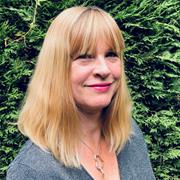
Prof. Kate Bowers (UCL Jill Dando Institute of Crime Science)
Kate is a Professor of Security and Crime Science at the UCL Security and Crime Science and Jill Dando Institute of Security and Crime Science. She has worked in the field of crime science for 30 years, with research interests focusing on the use of quantitative methods and data analytics in crime analysis and crime prevention.
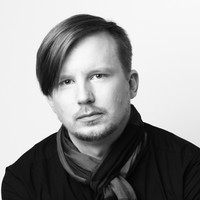
Daniel Koch López (KTH Royal Institute of Technology)
Daniel is Associate Professor in Urban Design with specialization in Spatial Analysis and docent in Architecture at KTH Architecture; he is also a practicing architect at Patchwork Architecture Laboratory. At KTH, Daniel works in the Urban Design and Urban Theory research area, heading the profile Critical Morphology and Spatial Analysis.
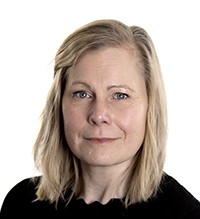
Charlotta Thodelius (University of Borås)
Charlotta is an Associate Professor of Criminology and work as a Senior Lecturer in Criminology at the Faculty of Police Work. She teaches in the Police Education Programme and the Bachelor’s Programme in Police Work with a focus on crime investigation as well as in the Faculty’s independent courses in criminology.
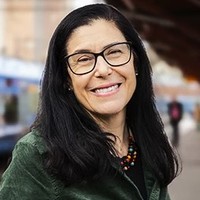
Prof. Vania Ceccato (KTH Royal Institute of Technology)
Vania is a Professor at the Department of Urban Planning and Environment, School of Architecture and the Built Environment, KTH Royal Institute of Technology, Stockholm, Sweden. She is the head of the UCS – Urban & Community Safety Research Group and the coordinator of the Network Safeplaces. She is interested in the relationship between the environment and safety.

Emelie Eriksson (Brottsförebyggande Rådet)
Utredare på Enheten för utveckling av brottsförebyggande arbete.

Lukas Ljungqvist (Stockholms stad and KTH Royal Institute of Technology)
Lukas is a part‑time industrial PhD candidate in Applied Urban Design His research examines how digital technologies and the broader digital transformation of society are used, and can be used, in urban design and planning processes to support systems thinking and enable sustainable transition. In parallel with his PhD, Lukas works as an urban planning strategist at the City Planning Administration, City of Stockholm.